
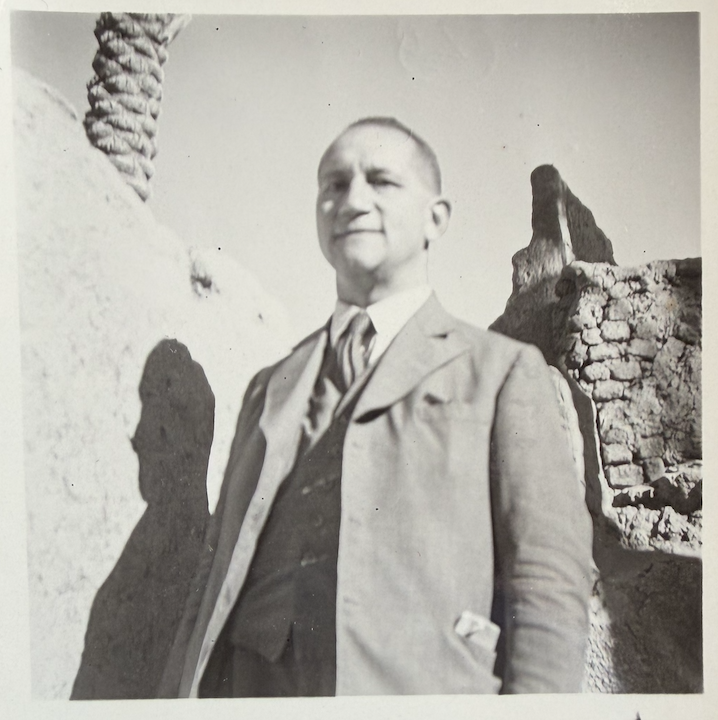
Workshop: Joseph Schacht at Oxford, Eighty Years On. Rethinking a Scholarly Legacy
04 November 2026
Friday, 4 December 2026
Memorial Room, The Queen’s College, University of Oxford
Eighty years after Joseph Schacht’s arrival in Oxford in 1946, this workshop revisits the scholarly legacy of one of the most influential figures in the modern study of Islamic law. Best known for The Origins of Muhammadan Jurisprudence (1950), Schacht profoundly shaped debates on the early development of Islamic legal traditions. Yet his scholarship extended well beyond the questions for which he is most frequently remembered. Bringing together scholars working on different aspects of his intellectual legacy, the workshop seeks to reconsider some of these less explored dimensions, from his engagement with manuscripts, libraries, and material culture to his approaches to Islamic thought, legal traditions, and contemporary Muslim societies. In doing so, it aims to situate Schacht’s work within the broader history of Islamic and Oriental Studies, while reflecting on the continuing relevance, influence, and limitations of his scholarship.
Programme
9:45–10:00
Fitzroy Morrissey and Clément Salah, “Introduction”
10:00–10:30
Rainer Brunner, “Joseph Schacht before Oxford: His Biography, Career and Vicissitudes, 1902–45”
Coffee Break
11:00–11:30
Clément Salah, “Joseph Schacht among Manuscripts and Libraries: Scholarly Practices and Networks in the 1950s”
11:30–12:00
Umberto Bongianino, “Reading Early Islam through Architecture: Joseph Schacht on Minbars, Minarets, and Mosques”
Lunch Break
13:30–14:00
Fitzroy Morrissey, “What is Islam? Mysticism and Religious Development in Schacht’s Anthology of Islamic Texts”
14:00–14:30
Robert Gleave, “Schacht and the Shīʿa”
Coffee Break
15:00–15:30
Dominik Krell, “Reevaluating Joseph Schacht’s Distinction between the Islamic and the Political for the 21st Century”
15:30–16:00
Concluding Discussion
Organisation and Support
This workshop is organised under the auspices of the Centre for Manuscript and Text Cultures (CMTC) and the Khalili Research Centre (KRC) with the generous financial and logistical support of The Queen’s College, Pembroke College, and the Shaikh Zayed Endowment Fund for Islamic Studies at the Faculty of Asian and Middle Eastern Studies, University of Oxford.
Convenors
Fitzroy Morrissey | Associate Professor of Islamic Studies and Law (Pembroke College / Faculty of AMES)
Clément Salah | Junior Research Fellow in Manuscript and Text Cultures (The Queen’s College / Faculty of AMES)