
JJC Foundation makes landmark gift to establish Sanskrit Fellowship at Queen’s
12 November 2026
The Centre for Manuscript and Text Cultures (CMTC) at The Queen’s College, University of Oxford, is delighted to announce the latest stage in its partnership with the Clay Sanskrit Library (CSL) thanks to a landmark gift from the JJC Foundation.
The gift will enable the CMTC and The Queen’s College to establish the John P. Clay Fellowship, a new, fully funded Career Development Fellowship in Sanskrit tenable for up to five years.
The gift is the JJC Foundation’s most recent and generous to Queen’s to date. It will strengthen the long-term future of Sanskrit scholarship at Oxford by building on the Foundation’s commitment to advancing the University’s work to preserve, teach, and interpret world heritage, as well as expanding CMTC’s global reach.
The John P. Clay Fellowship in Sanskrit will support the study of endangered South Asian textual traditions. Based at Queen’s, in association with CMTC and the Faculty of Asian and Middle Eastern Studies (AMES), the three-year post (renewable for a further two years) will serve as an essential bridge between doctoral research and permanent academic life, creating the ideal stepping stone for an early-career researcher to become a global leader in Sanskrit scholarship.
Supporting the next generation of Sanskrit scholars
For early-career academics in the humanities, the transition from doctoral research to a permanent university position presents a real hurdle. Opportunities for Sanskrit scholars are particularly limited, with short-term research contracts often providing little scope to develop the teaching and academic leadership experience needed for a long-term career.
The John P. Clay Fellowship has been designed to address this challenge. By providing up to five years of financial stability, dedicated research time, teaching experience, and opportunities to contribute to the Centre’s academic leadership, the Fellowship serves as an ideal springboard into a permanent academic post. The gift builds on the enduring generosity of John P. Clay and the JJC Foundation in support of Sanskrit scholarship at Queen’s and the University of Oxford. The Foundation has previously funded a DPhil scholarship in Sanskrit Manuscripts and provided vital support for the CMTC’s world-leading open-access journal, Manuscript and Text Cultures (MTC).
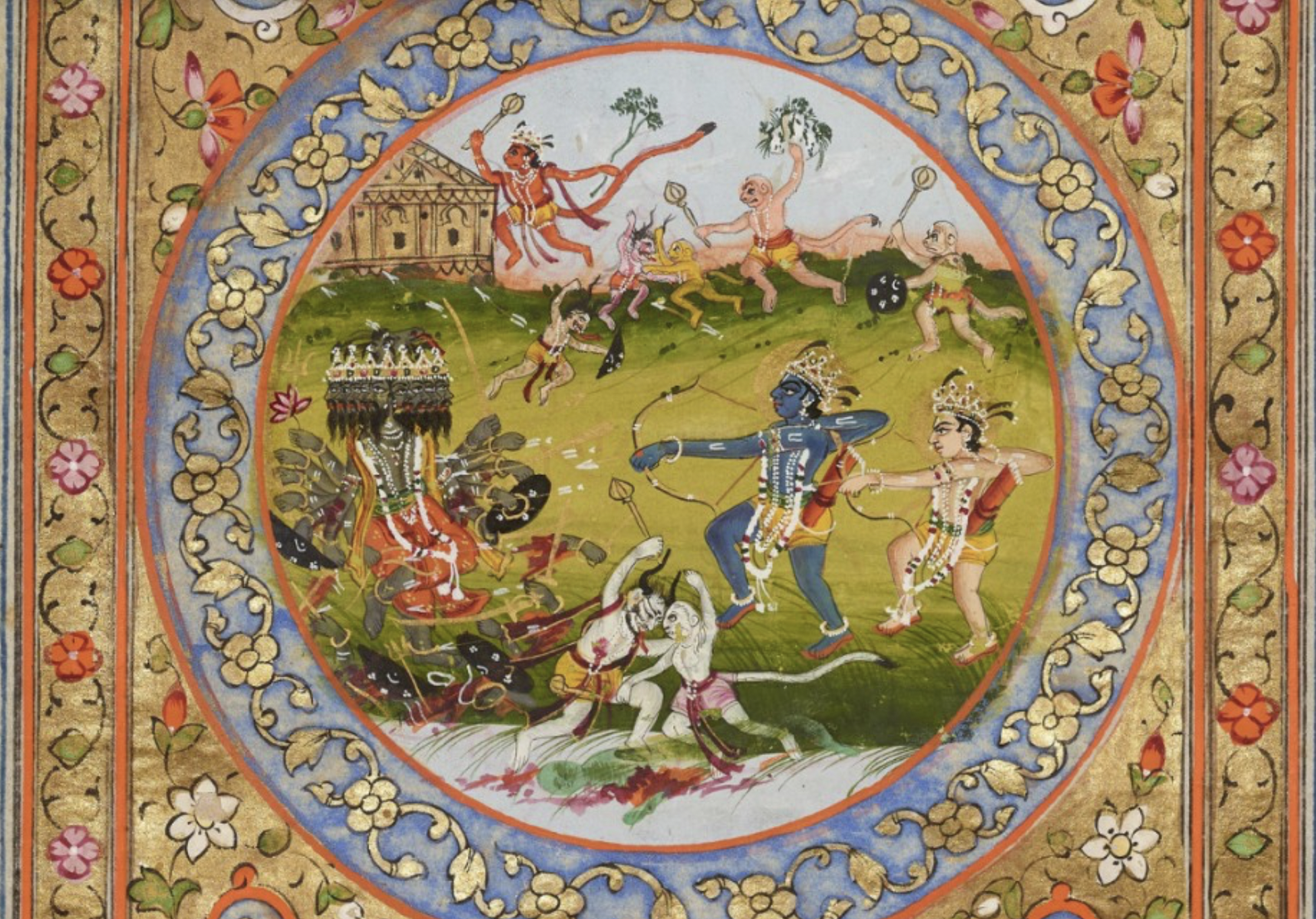
Sanskrit is far more than an ancient language; it provides the intellectual infrastructure for South Asian philosophy and literature. From Vedic literature and great epics such as the Mahābhārata and Rāmāyaṇa, to groundbreaking works on science, logic, poetics, and law, Sanskrit texts have shaped cultures and traditions across Asia and beyond. Yet despite this rich legacy, the future of Sanskrit scholarship faces significant challenges in higher education worldwide.
At Oxford, Sanskrit sits at the heart of both undergraduate and graduate humanities education. The new Fellow will strengthen research and teaching in Sanskrit, opening up new opportunities for students to engage with rare texts, and helping to maintain Oxford’s position as a leading international centre for the study of South Asia’s classical languages.
The John P. Clay Fellow will benefit from Oxford’s extensive collections of Indian manuscripts, historical documents, and classical art, held across institutions including the Bodleian Library, the Nizami Ganjavi Library, and the Art, Archaeology and Ancient World Library. These rich resources will provide valuable opportunities for original research, enabling the Fellow to work directly with rare primary sources and advance our understanding of Sanskrit manuscripts and textual traditions.
Advancing scholarship through global collaboration
Based at the Centre for Manuscript and Text Cultures at Queen’s, the John P. Clay Fellow in Sanskrit will become an integral part of the Centre’s academic community, contributing to its research activities and helping to shape its work on South Asian manuscript traditions.
The Centre brings together scholars from Oxford and institutions around the world to advance the study of pre-modern manuscripts and textual traditions. The Fellow will contribute to these international collaborations, connecting Sanskrit manuscript studies with research across different disciplines.
The John P. Clay Fellow in Sanskrit will also play a key role in the Centre’s publishing activities, overseeing Sanskrit-related content for its academic journal, Manuscript and Text Cultures, and working with the editorial board of its new peer-reviewed, diamond open-access book series, Manuscript and Text Cultures Monographs, published by Liverpool University Press.
The role will strengthen the Centre’s international partnerships, developing links with leading research institutions across South Asia and contributing to collaborative research and lectures at partner institutions in China, including Nanjing University and Tsinghua University in Beijing.
At Oxford, the John P. Clay Fellow in Sanskrit will coordinate a new lecture series, organise international conferences bringing together manuscript experts, and undertake original research into Sanskrit manuscripts and textual traditions, such as the ancient Sanskrit temple inscriptions of Angkor Wat in Cambodia. Together, these activities will cultivate an ongoing dialogue between Sanskrit scholarship and other written traditions from around the world.
Professor Dirk Meyer, Professor of Chinese Philosophy, Fellow of The Queen’s College, and Director of the Centre for Manuscript and Text Cultures said: “We are profoundly grateful to the JJC Foundation for its remarkable generosity and visionary commitment to Sanskrit scholarship at Oxford. This Fellowship is about much more than creating an academic post. It is about nurturing the next generation of scholars and safeguarding the expertise needed to understand South Asia’s extraordinary textual heritage. The post will ensure that these traditions remain part of a wider dialogue across cultures and disciplines.”